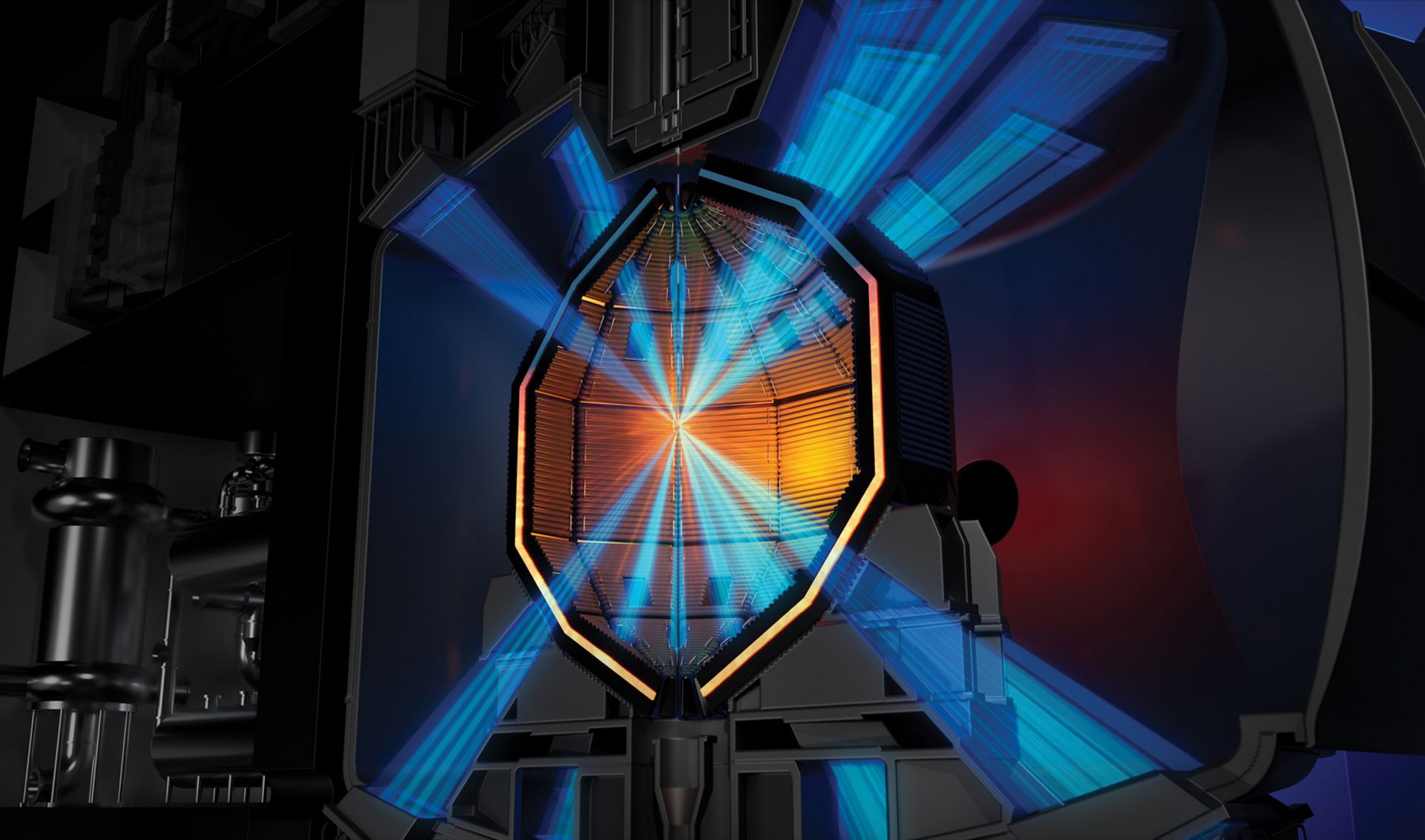
A conceptual model of a laser-based fusion power plant. A key difference from NIF is the ability to inject targets into the chamber rapidly, without needing to insert a long arm to precisely position the target. Targets would enter the chamber from the top at roughly 10 times per second in this model. (Image: Eric Smith)
Commercial fusion power is closer than ever. There are now around 30 U.S. fusion companies, several of which claim to be on track to connect to the grid as early as the 2030s.
Tokamak and laser inertial confinement approaches benefit from decades of research at facilities such as the National Ignition Facility (NIF) at Lawrence Livermore National Laboratory and ITER, with alternative concepts including stellarator, magnetic mirror, and Z-pinch confinement also making notable progress as private and government funding for fusion increases.
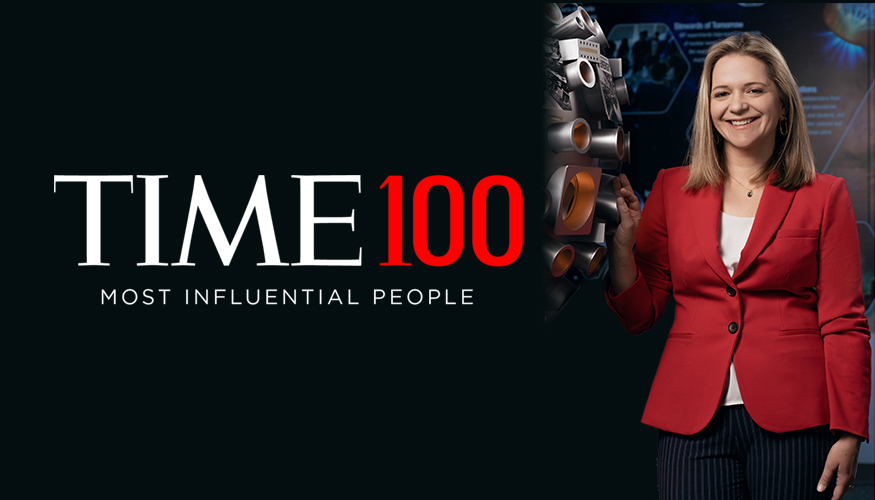
April 26, 2023, 12:00PMEdited April 26, 2023, 12:00PMNuclear News LLNL design physicist Annie Kritcher is honored as one of the TIME100 Most Influential People. (Photo: Blaise Douros/LLNL)
Physicist Andrea “Annie” Kritcher’s dedication to fusion target design has earned her a spot on the TIME100 Most Influential People list for 2023. Today, Kritcher and 99 other individuals on that list—among them Elon Musk, King Charles, Judy Blume, Patrick Mahomes, Beyoncé, Lionel Messi, Janet Yellen, and MrBeast—are being honored at the TIME100 Summit and Gala at the Lincoln Center in New York City.
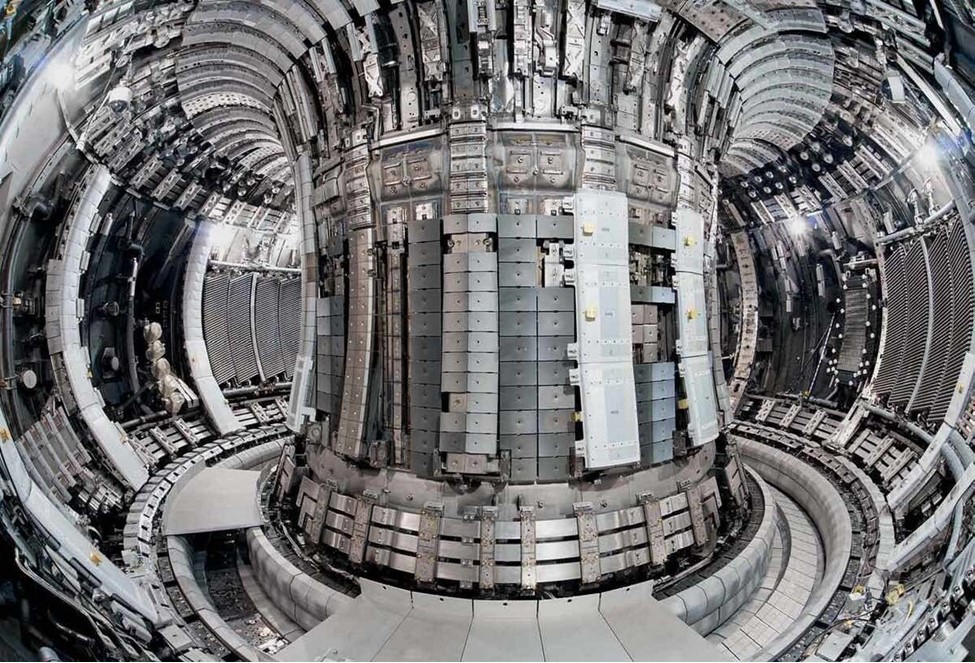
The JET tokamak. (Photo: European Consortium for the Development)
Nuclear fusion “might actually be on the cusp of commercial viability” today, says a recent article in Fortune magazine. The article offers a brief review of recent technical and entrepreneurial developments in fusion energy. It also places these developments in perspective regarding the hurdles that remain before commercialization can be realized.
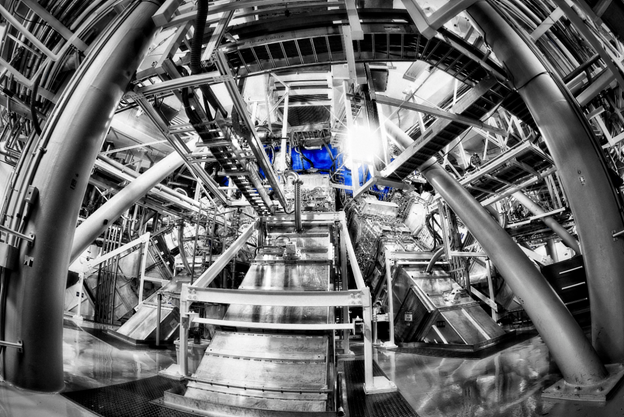
A color-enhanced photograph of the NIF target bay. (Photo: LLNL/Damien Jemison)
Lawrence Livermore National Laboratory is celebrating the yield from an experiment at the National Ignition Facility (NIF) of more than 1.3 megajoules of energy—eight times more than the yield from experiments conducted this spring and 25 times more than NIF’s 2018 record yield.